
What are biogeochemical cycles? Describe carbon cycle with a flow diagram. (IFS 2023/15 Marks)
What are biogeochemical cycles? Describe carbon cycle with a flow diagram. (IFS 2023/15 Marks)

Biogeochemical Cycles
Biogeochemical cycles refer to the natural processes through which elements and compounds are cycled through both biotic (living organisms) and abiotic (non-living components like air, water, soil) systems on Earth.
- Importance: These cycles are vital for maintaining the balance of essential elements like carbon, nitrogen, phosphorus, and water, which are necessary for life.
- Key Components:
- Biotic Components: Living organisms (plants, animals, decomposers).
- Abiotic Components: Atmosphere, hydrosphere, lithosphere.
- Types of Biogeochemical Cycles:
- Gaseous Cycles: Involve gases like carbon, nitrogen, and oxygen, where the atmosphere plays a significant role (e.g., carbon cycle).
- Sedimentary Cycles: Involve the cycling of elements like phosphorus, sulfur, and calcium, which are largely dependent on soil and water.
Carbon Cycle (With Flow Diagram)
- The carbon cycle is the process by which carbon moves between the atmosphere, oceans, soil, and living organisms.
- It is a gaseous biogeochemical cycle since the major form of carbon in the atmosphere is carbon dioxide (CO₂).
- This cycle is crucial for regulating the Earth's climate and supporting life.
Steps in the Carbon Cycle:
- Photosynthesis:
- Plants, algae, and cyanobacteria absorb carbon dioxide (CO₂) from the atmosphere during photosynthesis and convert it into organic matter (glucose).
- This process is crucial for fixing carbon into a usable form for consumers in the food chain.
- Respiration:
- Plants, animals, and microbes release carbon dioxide back into the atmosphere through respiration as they metabolize organic matter for energy.
- Decomposition:
- When organisms die, decomposers (bacteria, fungi) break down the organic material, releasing CO₂ and methane (CH₄) back into the atmosphere or soil.
- Oceanic Absorption:
- The oceans absorb large amounts of CO₂ from the atmosphere.
- Marine organisms, such as phytoplankton, also use CO₂ in photosynthesis.
- Carbon can be stored in the ocean for long periods as carbonates in marine organisms and sediments.
- Fossil Fuel Formation:
- Over millions of years, organic matter that is not decomposed (e.g., plant and animal remains) becomes buried and forms fossil fuels (coal, oil, natural gas).
- These fuels, when burned, release stored carbon back into the atmosphere as CO₂.
- Human Activities:
- Burning of Fossil Fuels: Industrial activities, transportation, and deforestation release significant amounts of CO₂, increasing atmospheric carbon concentrations.
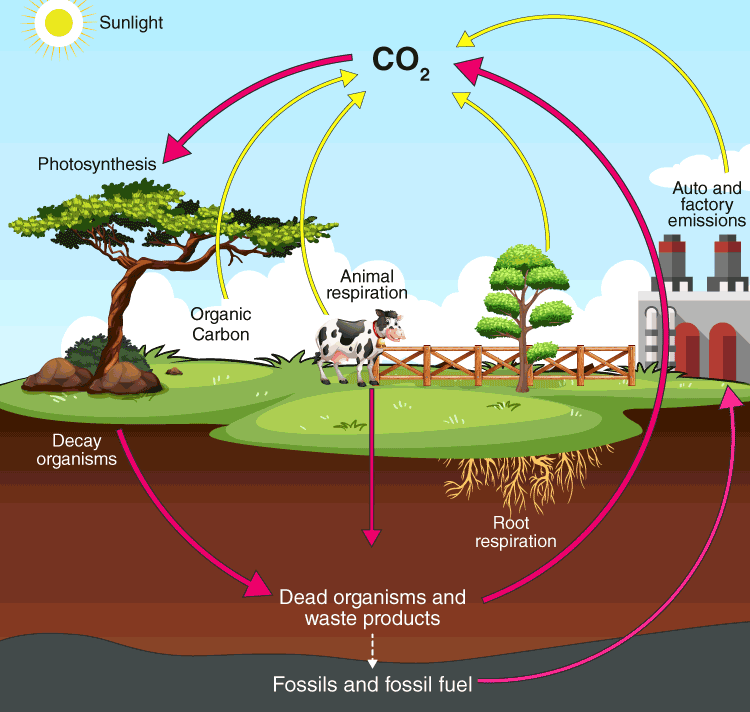
Detailed Explanation:
- Photosynthesis: Plants, algae, and some bacteria absorb CO₂ from the atmosphere and use sunlight to convert it into glucose (C₆H₁₂O₆), releasing oxygen (O₂) as a byproduct.
- Respiration: Organisms break down glucose for energy, releasing CO₂ back into the atmosphere.
- Decomposition: Decomposers like bacteria and fungi break down dead organisms, releasing carbon in the form of CO₂ or methane (CH₄) into the soil or atmosphere.
- Oceanic Absorption: The oceans play a significant role in absorbing CO₂, both in dissolved form and through biological processes like photosynthesis by marine life.
- Fossil Fuel Formation and Combustion: Organic material that is buried over geological time periods forms fossil fuels, which, when burned, release CO₂ back into the atmosphere.
Conclusion
The carbon cycle is a vital process that helps maintain the balance of carbon in the Earth's atmosphere and ecosystems. By studying these cycles, we can better appreciate the interconnectedness of all living organisms and their environment