
Describe the larval forms of Crustacea with suitable diagrams. (IFS 2021/15 Marks)
Describe the larval forms of Crustacea with suitable diagrams. (IFS 2021/15 Marks)

Introduction:
Crustacea is a diverse class of arthropods that includes crabs, lobsters, shrimp, and barnacles. These organisms undergo metamorphosis, with distinct larval forms before reaching adulthood.
Larval Forms of Crustacea
1. Nauplius
- General Features:
- First larval stage in most crustaceans.
- Unsegmented body with three pairs of appendages: antennules, antennae, and mandibles.
- Single median naupliar eye.
- No thoracic or abdominal segments.
- Function:
- Swimming and feeding.
- Gradual development of additional body segments and appendages.
2. Zoea
- General Features:
- Second larval stage found in decapods (e.g., crabs, lobsters).
- Large cephalothorax with a spine-like carapace.
- Well-developed eyes and elongated abdomen.
- Appendages on the thorax and rudimentary swimmerets.
- Function:
- Active swimming and planktonic feeding.
- Growth of appendages and further segmentation.
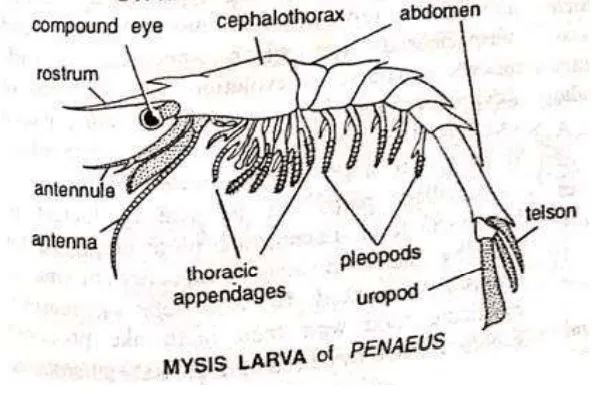
3. Mysis
- General Features:
- Third larval stage, particularly in shrimps and lobsters.
- Resembles adult form but still lacks fully developed appendages.
- Functional pleopods (swimmerets) and thoracic legs.
- Compound eyes and segmented body.
- Function:
- Intermediate stage between planktonic life and benthic adulthood.
- Active swimming and feeding.
4. Megalopa
- General Features:
- Found in crabs as the final larval stage.
- Transitional form resembling adult crab but with an elongated abdomen.
- Functional walking legs and reduced pleopods.
- Function: Settling to the substrate and preparing for benthic adult life.
5. Cypris Larva (in Cirripedia like barnacles)
- General Features:
- Bivalve-like carapace enclosing the body.
- Swimming appendages and specialized attachment organs.
- Function: Settlement and attachment to a substrate before metamorphosis into an adult barnacle.
6. Phyllosoma (in lobsters)
- General Features:
- Flattened and transparent body with long appendages.
- Large, feathery antennae and thoracic limbs.
- Function: Long pelagic stage with efficient dispersal capability.
Conclusion:
The larval forms of Crustacea undergo significant changes in body structure and behavior as they progress through different stages of development. These stages are essential for the growth and survival of these organisms before they reach adulthood.