
Describe the role of Calcitonin, Parathormone and Vitamin D3 in calcium metabolism. (IAS 2018/20 Marks)
Describe the role of Calcitonin, Parathormone and Vitamin D3 in calcium metabolism. (IAS 2018/20 Marks)

Introduction
Calcium metabolism is a crucial process in the body that involves the regulation of calcium levels in the blood and bones. Three important hormones involved in this process are Calcitonin, Parathormone, and Vitamin D3. Each of these hormones plays a specific role in maintaining calcium homeostasis in the body.
Calcitonin
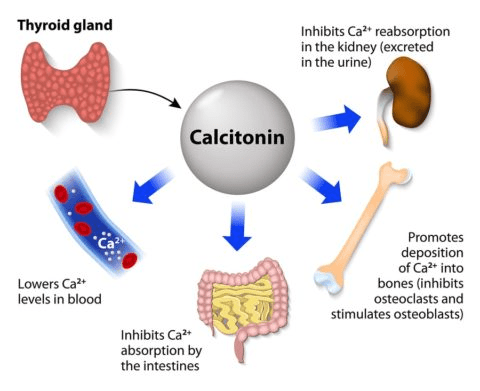
- Source: Calcitonin is a peptide hormone secreted by the parafollicular cells (C-cells) of the thyroid gland.
- Role in Calcium Metabolism:
- Lowers blood calcium levels: Calcitonin helps lower calcium levels in the bloodstream when they are elevated.
- Inhibits osteoclast activity: It reduces the activity of osteoclasts (bone-resorbing cells), which decreases the release of calcium from bones into the blood.
- Increases calcium excretion: It promotes the excretion of calcium in the urine by acting on the kidneys.
- Mechanism: The decrease in osteoclast activity leads to less bone resorption, and thus less calcium is released into the bloodstream. By inhibiting calcium reabsorption in the kidneys, calcitonin further contributes to calcium homeostasis.
Parathyroid Hormone (PTH)
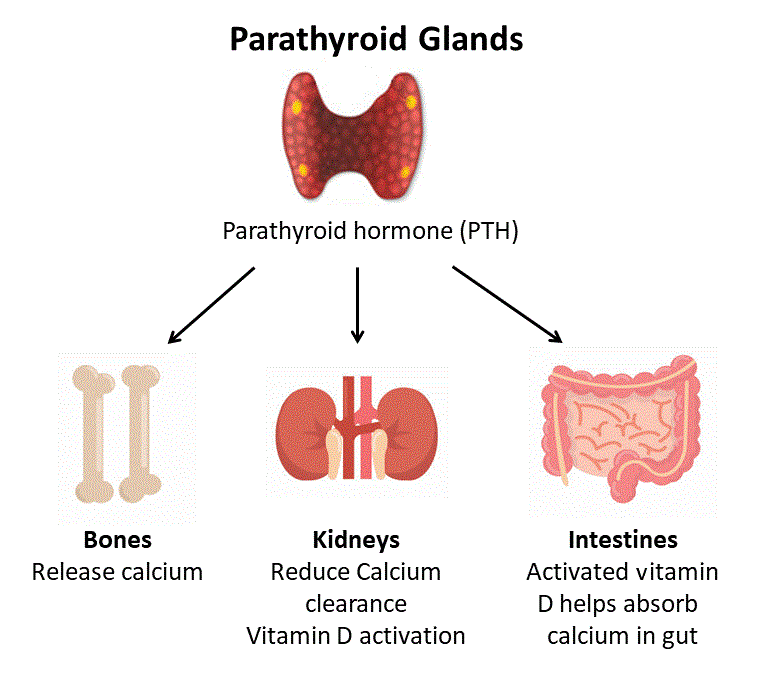
- Source: PTH is secreted by the parathyroid glands, which are located on the posterior surface of the thyroid gland.
- Role in Calcium Metabolism:
- Raises blood calcium levels: PTH has the opposite effect of calcitonin and works to increase calcium levels in the blood when they are low.
- Stimulates osteoclast activity: PTH promotes the activity of osteoclasts, leading to the release of calcium from bone into the bloodstream.
- Enhances calcium reabsorption in kidneys: It increases calcium reabsorption in the kidneys, reducing calcium loss in urine.
- Stimulates activation of vitamin D: PTH promotes the conversion of inactive vitamin D (calcidiol) into its active form (calcitriol) in the kidneys, which increases calcium absorption in the intestines.
- Mechanism: When blood calcium levels are low, PTH is released, which causes the bone to release calcium, reduces calcium excretion by kidneys, and promotes calcium absorption from the gut via activated vitamin D.
Vitamin D3 (Calcitriol)
- Source: Vitamin D3, also called cholecalciferol, is synthesized in the skin upon exposure to sunlight or obtained from dietary sources. The liver converts it to calcidiol (25-hydroxyvitamin D), and the kidneys convert calcidiol to the active form, calcitriol (1,25-dihydroxyvitamin D).
- Role in Calcium Metabolism:
- Increases calcium absorption: The primary function of active vitamin D (calcitriol) is to increase the intestinal absorption of calcium and phosphate, which are essential for bone formation and maintenance.
- Enhances bone mineralization: Calcitriol works synergistically with PTH to maintain bone health by promoting the deposition of calcium and phosphate into the bone matrix.
- Regulates phosphate metabolism: Vitamin D3 also plays a role in phosphate balance, which is critical for bone health and function.
- Mechanism: Vitamin D3, in its active form (calcitriol), binds to receptors in the intestines, promoting the synthesis of calcium-binding proteins that facilitate calcium absorption from the digestive tract. It also enhances renal reabsorption of calcium and phosphate.
Interaction Between Calcitonin, PTH, and Vitamin D3
- Balanced regulation: Calcitonin and PTH act antagonistically to regulate blood calcium levels. While calcitonin lowers calcium levels, PTH increases them. Vitamin D3, although it does not directly antagonize either hormone, supports PTH’s action in calcium absorption from the gut.
- Feedback mechanism: The levels of calcium in the blood are closely monitored, and any fluctuations prompt appropriate hormonal responses. Low calcium levels stimulate PTH and the activation of vitamin D3, while high calcium levels prompt calcitonin release.
Conclusion
Calcitonin, Parathormone, and Vitamin D3 are three important hormones involved in calcium metabolism. Together, they work to maintain calcium homeostasis in the body by regulating calcium levels in the blood and bones.