
Describe morphological structures of Peripatus and discuss its affinities. (IFS 2021/15 Marks)
Describe morphological structures of Peripatus and discuss its affinities. (IFS 2021/15 Marks)

Introduction
Peripatus, also known as velvet worms, are fascinating creatures that belong to the phylum Onychophora. They are characterized by their unique morphological structures that set them apart from other invertebrates.
Morphological Structures of Peripatus
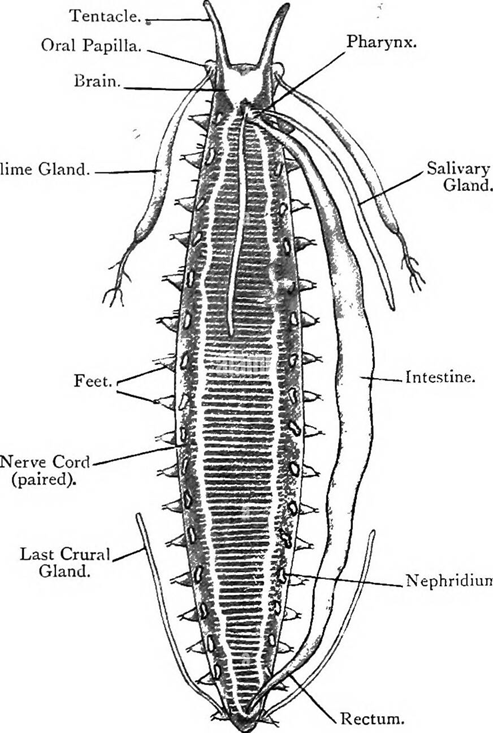
1. General Body Structure
- Body Shape: Elongated, cylindrical, and soft-bodied, typically measuring 1-15 cm in length.
- Segmentation: Body divided into segments, but external segmentation is not as pronounced as in annelids.
- Cuticle: Covered with a thin, flexible, and chitinous cuticle, providing protection and support.
2. Appendages
- Uniramous Limbs: Each body segment has a pair of stubby, unjointed limbs (usually 13-43 pairs) that assist in locomotion.
- Spiracles: Located on the sides of the body, allowing for gas exchange through a system of tracheae.
3. Head Structure
- Sensory Organs: Prominent antennae for chemoreception and touch, and simple eyes (ocelli) for light detection.
- Mouth: Equipped with jaws and a pair of oral papillae, which can produce a sticky secretion used to capture prey.
4. Internal Structures
- Coelom: A reduced coelom filled with hemolymph; the body cavity is primarily a hemocoel.
- Circulatory System: Open circulatory system with a heart-like structure for pumping hemolymph.
- Nervous System: Ladder-like nervous system with a pair of cerebral ganglia (brain) and ventral nerve cords.
Affinities of Peripatus
- Phylogenetic Relationships: Peripatus is often considered a transitional form between annelids (segmented worms) and arthropods (insects, crustaceans), reflecting characteristics of both groups.
- Evolutionary Significance:
- Their segmented body plan and respiratory system are reminiscent of annelids.
- The presence of jointed appendages and a cuticle similar to that of arthropods indicates evolutionary connections.
- Examples of Affinities:
- Annelida: Similarities in segmentation and body plan.
- Arthropoda: The cuticular structure and limb morphology suggest a close evolutionary link, particularly to the early ancestors of arthropods.
- Current Classification: Peripatus is placed in its own phylum (Onychophora), emphasizing its unique evolutionary lineage while highlighting its significance in understanding the evolution of arthropods and other invertebrates.
Conclusion
The morphological structures of Peripatus highlight their unique adaptations for survival in their environment. By examining their affinities within the animal kingdom, we can gain a better understanding of their evolutionary history and relationships with other organisms.