
Explain HPA axis. Draw a transverse section of the Adrenal gland and describe the functions of its different hormones. (IAS 2018/15 Marks)
Explain HPA axis. Draw a transverse section of the Adrenal gland and describe the functions of its different hormones. (IAS 2018/15 Marks)

HPA Axis (Hypothalamic-Pituitary-Adrenal Axis)
- The HPA axis is a complex network involving the hypothalamus, pituitary gland, and adrenal glands. It regulates stress response, immunity, mood, and energy metabolism.
- Components:
- Hypothalamus: Releases corticotropin-releasing hormone (CRH) in response to stress.
- Pituitary Gland: Secretes adrenocorticotropic hormone (ACTH) upon stimulation by CRH.
- Adrenal Glands: Produce glucocorticoids (e.g., cortisol) when activated by ACTH.
- Functions:
- Regulates the body’s response to stress by releasing cortisol.
- Controls metabolic processes like glucose production.
- Maintains homeostasis during physical or emotional stress.
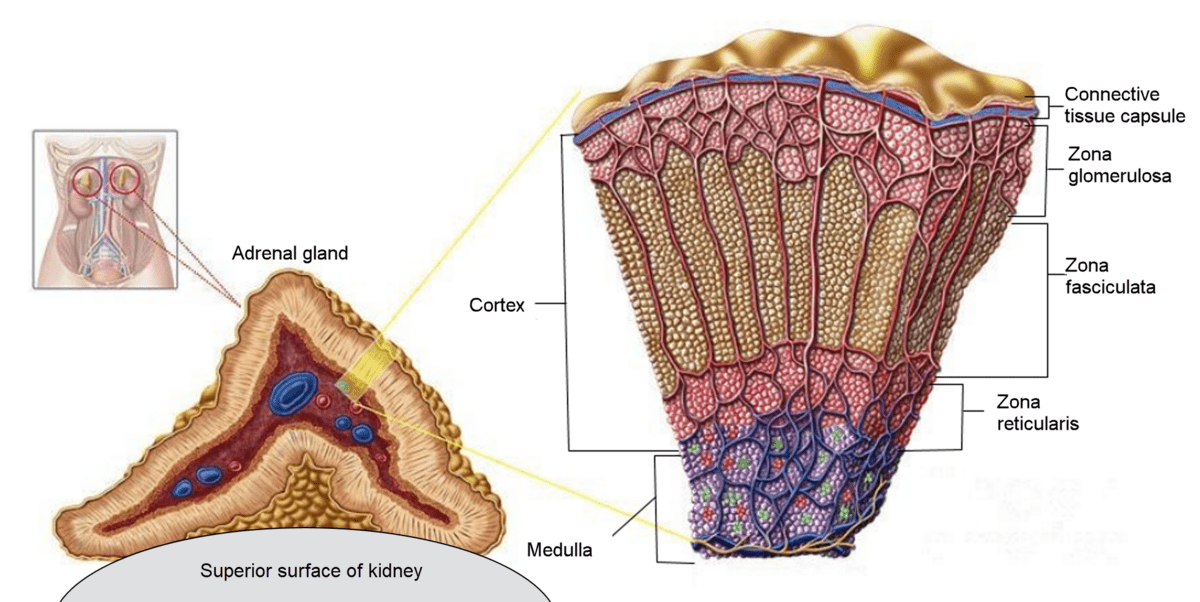
Transverse Section of the Adrenal Gland
Diagram:
A transverse section shows the adrenal gland with two distinct regions:
- Cortex (outer region):
- Zona glomerulosa
- Zona fasciculata
- Zona reticularis
- Medulla (inner region): Contains chromaffin cells.
Functions of Adrenal Gland Hormones
1. Hormones from the Cortex
- Zona Glomerulosa (Mineralocorticoids):
- Hormone: Aldosterone.
- Function: Regulates sodium and potassium balance, and maintains blood pressure.
- Zona Fasciculata (Glucocorticoids):
- Hormone: Cortisol.
- Function: Controls glucose metabolism, reduces inflammation, and manages stress.
- Zona Reticularis (Androgens):
- Hormone: Dehydroepiandrosterone (DHEA).
- Function: Precursors for sex hormones, supports secondary sexual characteristics.
2. Hormones from the Medulla
- Catecholamines:
- Hormones: Adrenaline (epinephrine) and Noradrenaline (norepinephrine).
- Functions:
- Prepare the body for “fight or flight” response.
- Increase heart rate, blood flow, and glucose release.
Conclusion:
The HPA axis and the hormones produced by the adrenal gland play a crucial role in the body's response to stress and maintaining homeostasis. Understanding the functions of these hormones can help in managing stress and maintaining overall health and well-being.