
Hierarchy
( UPSC Optionals)
Hierarchy
( UPSC Optionals)
Introduction to Hierarchy
- Meaning
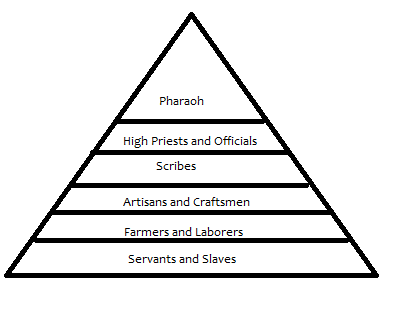
- A hierarchy is an arrangement of items that are represented as being "above", "below", or "at the same level as" one another.
- In sociology, hierarchy refers to a system of ranking or organizing individuals and groups based on status, authority, or power.
- E.g. Hierarchical structures are often observed within social institutions like family, education, religion, and the workplace, as well as within society as a whole.
- Aspects: Hierarchies are characterized by several levels, where each level has distinct roles, privileges, or responsibilities.
- Significance: This structure is crucial in shaping interactions, social mobility, resource allocation, and social order, as it reflects and reinforces norms, values, and power dynamics within a society.
PYQs: Equality, Inequality, Hierarchy
- Discuss the social consequences of economic development in India. Do you share the view that it has increased economic inequality and failed to promote social justice? (84/60)
- भारत में आर्थिक विकास के सामाजिक परिणामों की चर्चा कीजिए। क्या आप इस विचार से सहमत हैं कि इससे आर्थिक असमानता बढ़ी है और यह सामाजिक न्याय को बढ़ावा देने में विफल रही है? (84/60)
- Write short note: Sociological perspectives of "Right to work" in India. (90/20)
- संक्षिप्त टिप्पणी लिखें: भारत में "काम करने के अधिकार" के समाजशास्त्रीय दृष्टिकोण। (90/20)
- 'Social inequality is the device by which societies ensure that the most important positions, are filled by the most qualified persons.' Explain this view point and state the grounds on which it is refuted. (92/60)
- 'सामाजिक असमानता वह उपकरण है जिसके द्वारा समाज यह सुनिश्चित करता है कि सबसे महत्वपूर्ण पदों को सबसे योग्य व्यक्तियों द्वारा भरा जाए।' इस दृष्टिकोण की व्याख्या करें और उन आधारों का उल्लेख करें जिन पर इसका खंडन किया गया है। (92/60)
- "Buddhism is a social movement against hierarchical tradition for social equality in Indian society." Discuss. (94/60)
- "बौद्ध धर्म भारतीय समाज में सामाजिक समानता के लिए पदानुक्रमित परंपरा के खिलाफ एक सामाजिक आंदोलन है। चर्चा करें। (94/60)
- Write short note on equality and social justice. (95/20)
- समानता और सामाजिक न्याय पर संक्षिप्त टिप्पणी लिखिए । (95/20)
- Describe the responsibility for increasing economic inequalities in India and discuss their social consequences. (96/60)
- भारत में बढ़ती आर्थिक असमानताओं के उत्तरदायित्व का वर्णन करें और उनके सामाजिक परिणामों पर चर्चा करें। (96/60)
- Examine the conceptual distinction between social inequality and social Stratification. How do the nature and forms of the social stratification system determine the patterns of social mobility? (03/60)
- सामाजिक असमानता और सामाजिक स्तरीकरण के बीच वैचारिक अंतर का परीक्षण करें। सामाजिक स्तरीकरण प्रणाली की प्रकृति और रूप सामाजिक गतिशीलता के प्रतिरूपों का निर्धारण कैसे करते हैं? (03/60)
- Do you think that poverty, deprivation and inequalities are the major challenges in the process of social transformation? What are your suggestions to address and resolve these problems? (09/60)
- क्या आपको लगता है कि गरीबी, वंचन और असमानताएं सामाजिक परिवर्तन की प्रक्रिया में प्रमुख चुनौतियां हैं? इन समस्याओं को हल करने और हल करने के लिए आपके सुझाव क्या हैं? (09/60)
- Explain the inter-linkages between poverty, deprivation, and inequality. (200 words) (13/15)
- गरीबी, वंचन और असमानता के बीच अंतर-संबंधों की व्याख्या करें। (200 शब्द) (13/15)
- Discuss the emerging forms of 'inequalities' and 'acute poverty' as major challenges of social transformation in India. (16/20)
- भारत में सामाजिक परिवर्तन की प्रमुख चुनौतियों के रूप में 'असमानताओं' और अत्यधिक गरीबी' के उभरते रूपों की चर्चा कीजिए । (16/20)
- What is the difference between natural and social inequality? Give examples from caste and class dimensions. (18/10)
- प्राकृतिक और सामाजिक असमानता के बीच अंतर क्या है? जाति और वर्ग के आयामों से उदाहरण दीजिए। (18/10)
- How do sociologists construct gender in their analysis on social inequality? (2022/10)
- समाजशास्त्री सामाजिक असमानता के विश्लेषण में लिंग (जेंडर) की परिकल्पना कैसे करते हैं ?(2022/10)
Hierarchy अधिक्रम
- How does hierarchy get built into the systems of natural and social inequalities? (08/60)
- प्राकृतिक और सामाजिक असमानताओं की व्यवस्थाओं में पदानुक्रम कैसे निर्मित होता है? (08/60)
- In our society Hierarchical relations are influenced by social mobility. Explain how? (12/20)
- हमारे समाज में अधिक्रमित संबंध सामाजिक गतिशीलता से प्रभावित होते हैं। कैसे समझाइए ? (12/20)
- How are Hierarchy and Exclusion the major impediments in the transformation of societies? Discuss. (2020/20)
- समाज के परिवर्तन में पदानुक्रम और बहिष्करण प्रमुख बाधाएं कैसे हैं? चर्चा कीजिए। (2020/20)
- Is Indian society moving from "Hierarchy" towards "differentiation"? Illustrate your answer with suitable examples. (2021/20 marks)
- क्या भारतीय समाज "पदानुक्रम" से "भेदभाव" की ओर बढ़ रहा है? उपयुक्त उदाहरणों के साथ अपने उत्तर को स्पष्ट करें। (2021/20 अंक)
- Discuss the dimensions of power in the construction and maintenance of social hierarchies in a society. (2024/10 Marks)
- समाज में सामाजिक पदानुक्रमों के निर्माण एवं रख-रखाव में शक्ति-विन्यास के आयामों की चर्चा कीजिए। (2024/10 Marks)
Thinkers Perspective
Dipankar Gupta (Hierarchy vs. Stratification)
1. Hierarchy vs. Stratification in Sociology
- Stratification Origin: The term "stratification" is adapted from geology, where layers in the earth's crust represent distinct vertical levels.
- Geology vs. Sociology: Unlike geological layers, social strata are not always vertically structured or ranked.
- Horizontal Arrangements: Some social systems are organized by distinct layers that coexist horizontally or separately rather than vertically, where dominance or ranking is not the focus.
- Beyond Ranking: Certain stratified social categories focus more on differences than on a ranked hierarchy. It emphasizes diversity and not superior or inferior positioning.
- Example of Non-Hierarchical Stratification: Gender, language, nationalities and religion represent social distinctions. It would be futile, and indeed capricious, to hierarchise them vertically.
2. Secular India as an Example of Religious Stratification
- Religious Stratification in India: India provides an example where religions coexist as distinct strata without legal or social hierarchy.
- Legal Equality: The Indian Constitution promotes secularism. They have freedom to exist with their intrinsic differences without any hierarchy or unequal privilege in law.
- Diversity of Religions: In this structure, religions are distinct yet separate layers, emphasizing coexistence rather than dominance or subordination, reinforcing the principle of non-hierarchical stratification.
Karl Marx
- Class-Based Hierarchy: Marx viewed hierarchy as primarily rooted in economic class differences. The structure of society is organized around the ruling class (bourgeoisie) and the working class (proletariat).
- Power and Control: The ruling class holds power due to ownership of the means of production, perpetuating inequality.
- Conflict: Marx saw hierarchy as a source of constant class struggle that would eventually lead to a classless, communist society.
Max Weber
- Multiple Hierarchies: Weber expanded on Marx by introducing the concepts of class, status, and party, suggesting that social stratification exists in various forms.
- Power and Authority: Hierarchies are sustained through power in the forms of legal-rational, traditional, and charismatic authority.
- Bureaucracy: Weber viewed bureaucracy as a hierarchical structure that maintains efficiency but may also perpetuate inequality.
- Social Mobility: He acknowledged social mobility within hierarchies, though barriers still exist due to status and class.
Louis Dumont: Hierarchy and Caste-Based Exclusion
- Hierarchy as Cultural Value: Dumont argues that social hierarchies, especially in caste-based systems, are not merely economic but embedded in cultural values.
- Homo Hierarchicus: He describes Indian society as "homo hierarchicus," emphasizing how religious and cultural traditions maintain a structured system where certain groups are systematically excluded.
Emile Durkheim
- Functional Hierarchy: Durkheim argued that hierarchy is functional, helping maintain social order and stability by assigning roles based on skill and specialization.
- Organic Solidarity: In complex societies, hierarchy emerges naturally, binding individuals through interdependence.
- Social Cohesion and Harmony: Durkheim emphasized the role of hierarchy in creating social cohesion, with each part playing a distinct but necessary role.
Pierre Bourdieu
- Social Capital and Hierarchy: Bourdieu emphasized that hierarchies are formed and perpetuated through social capital, cultural capital, and symbolic capital.
- Habitus: Individuals internalize social hierarchies through habitus, shaping their behaviors and perceptions of social position.
- In sociology, habitus describes how people perceive and respond to the social world through their personal habits, skills, and character.
- Symbolic Violence: Bourdieu argued that hierarchy is maintained through symbolic violence, where dominant groups impose values that naturalize inequality.
Theoretical Perspectives on Hierarchy
Functionalist Perspective
- Role Allocation: Hierarchies help in the allocation of roles based on skills and qualifications, ensuring people are placed in roles they are best suited for, thus enhancing overall societal efficiency.
- Social Order and Stability: Hierarchies contribute to social order by establishing a structured system where individuals understand their roles and expectations, promoting stability in society.
- Meritocracy: This perspective views hierarchies as systems that reward individuals based on merit and contribution, creating a fair competition that motivates personal and social growth.
Conflict Perspective
- Power and Inequality: Hierarchies are seen as tools for the dominant groups to maintain power and control, reinforcing systemic inequalities and enabling exploitation of the lower strata.
- Class Struggle: Conflict theorists argue that hierarchies are the basis for class struggle, where different social classes compete for resources and influence, often leading to social conflict.
- Oppression and Exploitation: Hierarchies enable privileged groups to oppress and exploit subordinate groups, reinforcing a cycle of inequality and limiting social mobility for the disadvantaged.
Weberian Perspective
- Authority Types: Weber identified three types of authority—traditional, charismatic, and rational-legal—which influence hierarchical structures and how they are maintained in society.
- Status and Class Distinction: Hierarchies are not only based on economic class but also on status and prestige, reflecting complex social distinctions that go beyond mere wealth.
- Bureaucracy and Rationalization: Weber emphasized that modern hierarchies often emerge from bureaucratic structures, which prioritize efficiency and control through rationalized processes, impacting individuals’ roles and social status.
Stages of Hierarchy
1. Value Attachment
- Cultural Values and Social Norms:
- Societies often attach hierarchal value to specific roles, jobs, or groups based on historical and cultural norms.
- E.g. In India, the caste system historically attached value to different groups, assigning higher status to the Brahmin caste and lower status to Dalits.
- Economic and Political Power:
- Upper ranks in hierarchy emerge when certain groups control resources, reinforcing their superior status.
- E.g. In India, land ownership historically concentrated power in certain castes and communities, creating long-standing economic inequality.
2. Differentiation: Existing Natural Differences
- Biological and Physical Differences:
- Social systems recognize natural physical differences, sometimes valuing them unequally.
- E.g., In rural India, men are often preferred for physical labor jobs due to perceived physical strength.
- Skill-based Differences:
- Different abilities lead to role specialization but can also be used to justify unequal treatment.
- E.g. In India’s IT industry, a gap exists between skilled and unskilled workers, leading to social and economic differentiation.
3. Ranking: Basic Comparison
- Social Hierarchies:
- People are ranked based on perceived social roles or status, often creating higher and lower groups.
- In India, the caste system still creates a social hierarchy in many regions, affecting daily interactions and societal roles.
- Educational Ranking:
- Access to and quality of education contribute to ranking within society.
- E.g. Prestigious institutions like IITs and IIMs often lead to higher-ranked social and economic positions.
4. Rewarding: Incentives and Discrimination
- Economic Rewards:
- Certain professions or castes are more likely to receive better pay and rewards.
- In India, people in urban corporate jobs typically earn higher wages than those in rural agricultural roles, reinforcing economic disparities.
- Social Privileges and Discrimination:
- Certain groups may be systematically discriminated against while others enjoy privileges.
- Scheduled Castes and Tribes in India often face discrimination, while others receive better treatment in employment and social settings.
5. Perpetuation of Strata
- Inheritance of Social Status:
- Social hierarchies are often perpetuated across generations through inherited wealth, status, and resources.
- In India, land and business ownership are frequently passed down within families, preserving economic advantage for particular castes or classes.
- Institutional Reinforcement:
- Institutions like marriage, religion, and even schools reinforce existing social stratifications.
- In India, marriage within the same caste (endogamy) is still widely practiced, ensuring that caste boundaries are maintained across generations.
Historical Development of Hierarchical Systems
Ancient Hierarchies
- Caste Systems: Prominent in South Asia, particularly in India, where caste determined occupation, marital choices, and societal interactions; deeply rooted in religious beliefs.
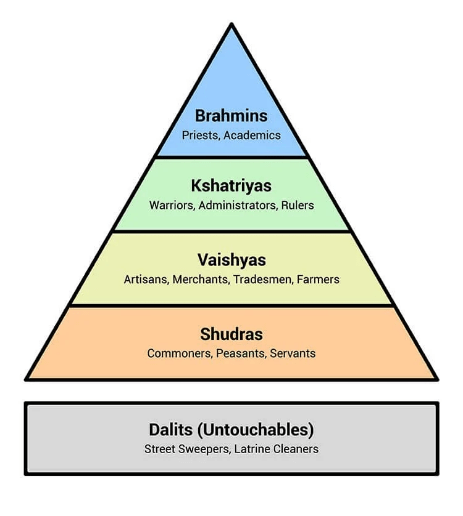
- Example: The Varna system, dividing people into Brahmins, Kshatriyas, Vaishyas, and Shudras.
- Tributary Systems: Hierarchies formed around tribute collection, often seen in ancient empires like the Chinese dynasties, where regional leaders paid homage to central rulers.
- Example: The tributary system in ancient China with surrounding states paying tribute to the emperor.
Medieval Hierarchies
- Monarchical Authority: Kings and queens held centralized power, with loyalty and obedience as the basis for governance.
- Example: European kingdoms under absolute monarchies, where the king’s word was law.
- Feudal Systems: Predominant in ancient Europe, Asia, and parts of Africa, where land ownership determined social status; kings, nobles, and peasants had clearly defined roles.
- Example: Medieval European feudalism with lords, vassals, and serfs.
- Religious Hierarchies: The Church held significant power, dictating moral and social order.
- Example: The Catholic Church's influence in Europe, where clergy occupied high positions and influenced kings.
- Guild Systems: Artisan and merchant guilds established hierarchies within trades, regulating quality, training, and market control.
- Example: Medieval craft guilds in Europe, where masters, journeymen, and apprentices had distinct ranks.
Industrial Revolution and the Shift in Hierarchical Structures
- Rise of Capitalism and Class Distinction: With factory production, a capitalist class (owners) and a working class (laborers) emerged, changing the socio-economic hierarchy.
- Example: Factory owners in 19th-century Britain gained wealth and social influence over traditional aristocracy.
- Shift from Agrarian to Industrial Society: Rural, land-based hierarchies gave way to urban-based, factory-led systems, altering social mobility and occupational structures.
- Example: Farmers moved to cities for factory jobs, weakening land-based hierarchies.
- Emergence of Middle Class: Skilled workers, merchants, and professionals became more significant, forming a new middle class that bridged the gap between the wealthy and the working classes.
- Example: The rise of clerks, shopkeepers, and professionals as a distinct societal group.
Contemporary Society
- Corporate Hierarchies: In modern workplaces, corporate hierarchies have developed with defined roles from executives to entry-level employees.
- Example: CEO, managers, and staff within a multinational corporation.
- Social Mobility and Education: Access to education and skills has increased social mobility, allowing people to move up the hierarchy regardless of background.
- Example: Scholarships and educational opportunities allowing students from underprivileged backgrounds to succeed.
- Intersectionality and Fluid Identities: Modern society challenges rigid hierarchies, emphasizing individual identity and equality across race, gender, and class.
- Example: Movements like feminism and civil rights advocating for equality and dismantling traditional hierarchies.
Causes of Hierarchical Maintenance and Reinforcement
- Socialization Processes
- Family Influence: Hierarchies are reinforced as family structures often instill social norms and expectations from a young age.
- Educational Systems: Schools and educational institutions teach obedience to authority, often reflecting and reinforcing societal hierarchies.
- Cultural Norms and Values: Societies transmit hierarchical values through rituals, traditions, and cultural beliefs, making hierarchies appear natural and acceptable.
- Economic Structures and Inequality
- Class-Based Economic Systems: Economic disparities create and sustain class-based hierarchies, where wealth and social status determine one's position.
- Labor Market Segmentation: Different levels of job access and compensation reinforce hierarchy by limiting opportunities for upward mobility.
- Power and Authority Structures
- Political Systems: Governments and political structures often have centralized power, reinforcing social hierarchies by controlling resources and decision-making.
- Law and Enforcement: Legal systems and policing practices maintain hierarchies by enforcing norms that benefit the ruling groups or elite.
- Symbolic Capital and Prestige
- Status Symbols: Material possessions, education, and job titles serve as symbols that reinforce one's position within the hierarchy.
- Social Networks and Connections: Access to influential social networks reinforces hierarchical positions, as privileged groups maintain power through exclusivity.
- Institutionalized Discrimination
- Racism, Sexism, and Casteism: Prejudicial practices embedded in society reinforce hierarchies by systematically disadvantaging specific groups.
- Occupational Segregation: Certain groups are steered into specific job roles, reinforcing societal hierarchy by limiting economic mobility.
- Ideological and Religious Justifications
- Religious Beliefs: Some religious doctrines justify social hierarchies, presenting them as divinely ordained or morally righteous.
- Ideological Control: Societies may use ideologies like meritocracy to rationalize and legitimize social hierarchies, framing inequalities as outcomes of individual effort.
- Social and Cultural Reproduction
- Intergenerational Transmission: Families pass down economic resources, social capital, and cultural knowledge, reinforcing their hierarchical position across generations.
- Educational Reinforcement: Schools reinforce social hierarchies by teaching values, behaviors, and knowledge that align with dominant social classes.
Types of Social Hierarchies
1. Class Hierarchies
- Economic Status: Social classes are often divided based on wealth, income, and property ownership. Those in higher economic strata typically have more resources and opportunities.
- Education and Occupation: Higher social classes usually have access to better education and prestigious occupations, reinforcing their social status.
- Social Capital and Networks: Upper classes tend to have stronger networks and social connections, providing them with more influence and opportunities in society.
2. Gender Hierarchies
- Patriarchal Structures: Many societies are patriarchal, giving men greater authority and control over resources and decision-making.
- Labor Division: Traditional gender roles often assign men to public workspaces and women to domestic tasks, creating a hierarchy of labor value.
- Access to Rights: Historically, women and gender minorities have had less access to rights and opportunities, creating gender-based disparities in social, political, and economic arenas.
3. Racial and Ethnic Hierarchies
- Institutional Racism: Systemic barriers prevent certain racial or ethnic groups from accessing resources and opportunities, reinforcing racial inequalities.
- Stereotyping and Discrimination: Prejudiced beliefs lead to unequal treatment, where marginalized groups face social stigma and limited chances for social mobility.
- Segregation and Isolation: Geographic and social segregation limits interactions between groups, reducing intergroup understanding and reinforcing hierarchical divisions.
4. Occupational Hierarchies
- Skill Levels and Training: Occupations are often ranked based on skill level, with more specialized or demanding jobs viewed as higher status.
- Economic Reward: Higher-status occupations generally offer better pay, benefits, and working conditions, reinforcing social distinctions.
- Prestige and Recognition: Certain occupations, such as doctors, lawyers, and scientists, receive more social prestige, contributing to occupational stratification.
5. Age-Based Hierarchies
- Authority and Experience: Older individuals are often given higher social status based on their experience, knowledge, and authority.
- Access to Resources: Age can affect access to resources, with younger individuals often having less economic power and autonomy.
- Youth vs. Elder Bias: While older adults may hold authority, modern societies sometimes favor youth, associating it with innovation and physical ability, creating complex age-related hierarchies.
Case Studies of Hierarchical Systems
- Caste System in India
- Influences on education, employment, and social relationships. Despite legal reforms, caste-based discrimination persists in some regions.
- Urbanization and education have slightly weakened caste rigidity, but caste-based identities remain significant in rural areas and politics.
- Class Stratification in Indian Urban Society
- Access to quality education, healthcare, and housing varies across classes, leading to social and economic disparities.
- Economic liberalization has widened income gaps, with the rise of a wealthy elite and an expanding middle class.
- Apartheid in South Africa
- Severe restrictions on Black South Africans’ rights, leading to socio-economic deprivation and political exclusion.
- Post-apartheid reforms aim to reduce racial inequalities, though economic disparities still linger.
- Feudal System in Medieval Europe
- Created rigid social classes with limited upward mobility, concentrating wealth and power in the hands of the nobility.
- Over centuries, industrialization and democratic reforms dismantled the feudal structure, shifting towards egalitarianism.
- Gender-Based Hierarchy in Indian Family Structures
- Gender roles limit women's opportunities in education and employment, affecting their autonomy.
- Movements for women’s rights and increasing female education have slowly begun challenging traditional gender hierarchies.
- Gender Inequality in Middle Eastern Countries
- Gender-based hierarchies limit women's roles in society, affecting economic growth and social development.
- Reforms in recent years in some Middle Eastern countries have improved women’s rights, though societal attitudes continue to pose challenges.
Impact of Hierarchies on Individuals and Society
Sociological Effects
- Social Cohesion and Group Identity
- Hierarchies can create a sense of unity within social classes or groups, strengthening group identity.
- Example: Caste-based associations in India foster solidarity among members.
- Marginalization of Lower Social Classes
- Lower-status groups often face exclusion, limiting their participation in mainstream social and cultural life.
- Example: Indigenous communities may experience marginalization within larger national contexts.
- Normalization of Social Roles
- Hierarchies reinforce traditional roles, often pressuring individuals to conform to expected behaviors.
- Example: Gender roles in traditional societies are often strictly maintained through hierarchical norms.
Social Inequality and Access to Resources
- Unequal Access to Education and Employment
- Those in lower hierarchies face barriers to quality education and career opportunities.
- Example: Economic class often dictates the quality of education one can afford, influencing career prospects.
- Health Disparities
- Higher social classes typically have better access to healthcare, impacting longevity and quality of life.
- Example: In many countries, the wealthy can afford private healthcare, while others rely on overburdened public systems.
- Income and Wealth Gaps
- Hierarchical systems often perpetuate wealth concentration, limiting upward mobility.
- Example: Corporate hierarchies reward those at the top disproportionately, widening the income gap.
Power Dynamics and Social Control
- Dominance of Elite Groups
- Higher hierarchies use power to influence policies, maintaining their control over resources and social direction.
- Example: Political elites often shape policies in ways that benefit them, such as tax breaks.
- Internalization of Power Structures
- People begin to accept and uphold hierarchical structures as natural, often resisting change.
- Example: Acceptance of "meritocracy" in workplaces, even when advancement is biased toward certain groups.
- Social Control through Media and Culture
- Hierarchies influence media narratives, shaping public opinion to support existing power structures.
- Example: The portrayal of the wealthy as role models in media promotes the idea that wealth equates to success.
Psychological Effects
- Self-Esteem and Social Comparison
- Hierarchies create a culture of comparison, affecting self-worth, especially for those in lower positions.
- Example: Social media often intensifies feelings of inadequacy by showcasing the lives of the affluent.
- Stress and Anxiety
- Constant exposure to hierarchical pressure can lead to mental health issues, especially for those striving to "move up."
- Example: The pressure to succeed in corporate hierarchies can lead to burnout among employees.
- Alienation and Isolation
- Individuals in lower positions may feel disconnected from society, leading to feelings of alienation.
- Example: Factory workers may feel detached from the product and company they serve, affecting job satisfaction.
Challenges to Hierarchical Structures
Modern Social Movements
- Identity-Based Movements
- Rise of movements centered on identities like gender, race, and LGBTQ+ rights challenge traditional power structures.
- Example: The Black Lives Matter movement highlights racial inequalities, mobilizing global support and prompting reforms in policing and social justice.
- Anti-Capitalist Movements
- Movements against corporate power and economic inequality, such as Occupy Wall Street, oppose capitalist hierarchies and demand systemic change.
- Example: Occupy Wall Street protests called out the “1%” for economic disparity, pushing for more inclusive economic policies.
- Environmental Activism
- Environmental movements contest corporate and governmental power over resources and call for sustainable practices.
- Example: Greta Thunberg’s Fridays for Future has united young people globally, putting pressure on governments to address climate change responsibly.
Democratization and Decentralization Efforts
- Participatory Governance
- Efforts to involve citizens in governance challenge centralized power by giving people a direct voice in decision-making.
- Example: Participatory budgeting in Brazil empowers citizens to decide on local budgets, democratizing financial decisions.
- Local Empowerment Movements
- Emphasis on empowering local bodies undermines central authority, allowing communities to manage their affairs autonomously.
- Example: In India, the Panchayati Raj system decentralizes power to village-level governments, encouraging self-governance.
- Worker Cooperatives
- These cooperatives give workers ownership, challenging traditional employer-employee hierarchies and promoting equitable business models.
- Example: Mondragon Corporation in Spain operates under worker ownership, distributing decision-making power and profits equally among workers.
Role of Technology in Flattening Hierarchies
- Social Media as an Equalizer
- Social media platforms give individuals direct access to a large audience, reducing dependence on traditional media power structures.
- Example: Twitter enables activists to communicate directly with the public, bypassing traditional gatekeepers and empowering grassroots voices.
- Remote Work and Organizational Flexibility
- Technology has facilitated remote work, reducing the rigid structures of office-based hierarchies.
- Example: Companies like GitLab operate entirely remotely, allowing for more flexible, collaborative work environments with reduced managerial control.
- Blockchain for Decentralized Decision-Making
- Blockchain technology enables decentralized, transparent decision-making, minimizing centralized control.
- Example: Decentralized Autonomous Organizations (DAOs) allow members to vote on decisions without a central authority, fostering egalitarian structures.